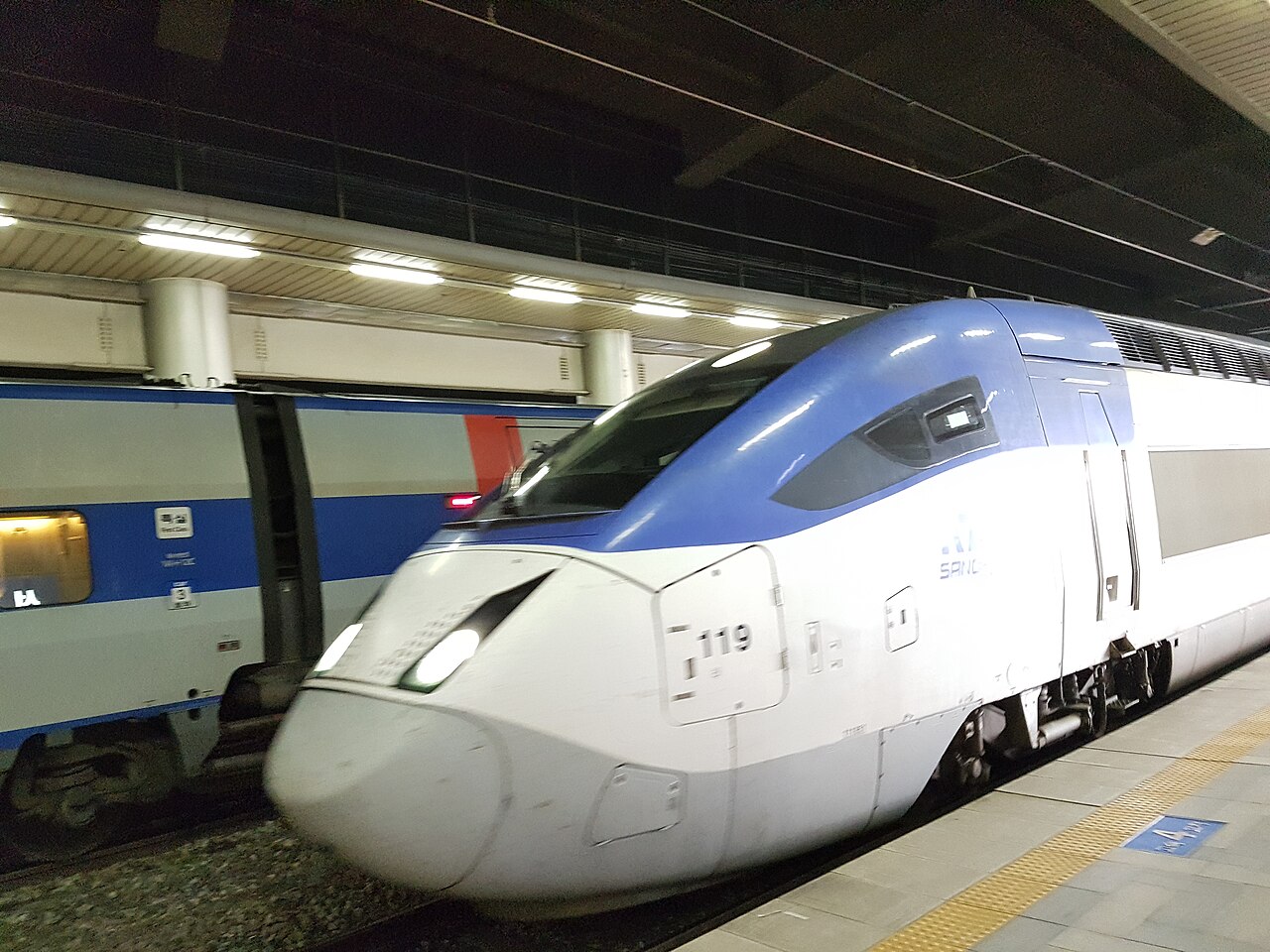
KTX-Seoul Station · Chinmayamahapatra · CC BY-SA 4.0 · Image details
Choose the pass only when your committed journeys fit its travel days and cost more as individual tickets after comparable extras. Buying a pass does not reserve seats. Start with the trip you actually want, then compare its cost; adding unwanted rides to make a pass look cheaper changes the trip rather than saving on it.
The original official-source review was completed on September 10, 2026. On October 15, we rechecked the direct KORAIL pass prices, ten-day travel period, passholder seat-reservation window and refund wording. The refund wording still differs between official screens, as explained below. We have not purchased a pass, completed foreign-card checkout or tested boarding.
Current prices and travel days
KORAIL’s price table lists these select-day passes. Prices are per person in Korean won, rechecked October 15, 2026. Confirm the total for your passenger category before paying.
| Selected travel days | Adult, age 13+ | Child, ages 6–12 |
|---|---|---|
| 2 days | KRW 131,000 | KRW 66,000 |
| 3 days | KRW 186,000 | KRW 93,000 |
| 4 days | KRW 234,000 | KRW 117,000 |
| 5 days | KRW 275,000 | KRW 138,000 |
The selected days must fall within the 10-day period beginning on the pass’s start date, as described on the KORAIL pass page. Count travel dates, not the number of cities. A day spent sightseeing without a covered train ride does not help your cost comparison.
Write each intercity journey on a calendar before choosing a pass. Check the passenger category on both sides; do not carry over a youth or group price from an older comparison into today’s direct-purchase calculation.
For example, rail journeys on November 2, 6 and 11 occupy three travel days within the ten-day period beginning November 2. A November 12 ride falls outside that period. These are calendar examples, not confirmed train availability. For each date, write the actual station pair, required arrival time and individual-ticket total; put Seoul subway or SRT costs in a separate, uncovered column.
Compare the total for one traveler
Price the exact dates, departures and class you would book individually. Separate committed journeys from optional day trips. Then use:
Potential saving = eligible individual-ticket total − pass price − pass-specific extras.
Illustrative arithmetic for the KRW 131,000 adult two-day pass, assuming covered journeys on valid days and no supplements:
| Hypothetical eligible-ticket total | Comparison |
|---|---|
| KRW 120,000 | Individual tickets cost KRW 11,000 less. |
| KRW 180,000 | The pass costs KRW 49,000 less. |
The ticket totals are examples, not current fares for a named route. For a Seoul–Busan return trip, retrieve your actual two quotes. For a longer itinerary, repeat the comparison without optional excursions; that shows whether your decision depends on taking them.
| Your planned rail use | Comparison to make before buying |
|---|---|
| Seoul sightseeing with subway rides | The pass excludes the subway. Compare local transport options instead. |
| One Seoul–Busan journey | Compare that one train’s current ticket quote with the smallest pass. Do not add a return journey you will not take. |
| Seoul–Busan return on two dates | Add the two acceptable departures. A cheaper quoted train is irrelevant if it misses your hotel check-in or flight connection. |
| Three rail dates within ten days | Compare all individual tickets, a three-day pass, and a two-day pass for two dates plus individual tickets for the remaining date. |
For that last case, total the eligible ticket quotes by travel date, then test the two-day pass on the two more expensive dates. Using the October 15 adult prices, the three-day pass costs KRW 55,000 more than the two-day pass. If the remaining date’s tickets cost less than that difference, the two-day pass plus those tickets is cheaper than the three-day pass, before any differing supplements. Still compare this mixed option with buying every ticket individually. Recalculate if the pass prices change.
Enter your figures in our pass comparison tool. Add supplements and mark excluded journeys as uncovered. Costs that are the same under both options belong in the trip budget, but are not a pass benefit. The tool compares your inputs; it does not check eligibility or fetch seats.
Check the traveler and the train
KORAIL’s eligibility rules describe a pass for foreign visitors and exclude people with Korean nationality. Match the purchaser’s requested details to their passport before paying.
KTO’s coverage summary excludes SRT, subways and temporary tourist trains. Keep local transport separate. First-class reservations require a supplement described as 50% of that route’s first-class fare; do not treat the pass price as an all-inclusive first-class ticket.
Register the day, then reserve the seat
KORAIL’s FAQ gives this sequence after purchase:
- Retrieve the pass through MY TICKET.
- Open DETAILS, then Add beside Departure Date, and register the travel day.
- Return to the pass and use SEAT RESERVATION for your intended train.
- Reopen the issued reservation and check the date, station, departure and seat. A pass purchase alone does not complete this step.
The pass information page, rechecked October 15, lists up to two seat reservations per person per day. It prohibits duplicate reservations for the same journey and date; cancel the existing seat before its departure when changing the time.
The same pass page explicitly says seat reservations open two months before the departure date, confirmed October 15. Check the required departure through the passholder reservation process; an ordinary-ticket search result alone is not a passholder seat reservation. Keep an alternative departure in your plan if a particular train is essential to your connection.
For ordinary ticket searches and current sale-window exceptions, follow the official KTX booking guide.
Sold-out trains and holiday restrictions
A pass is not a guarantee of a seat or permission to ignore seasonal restrictions. If sitting matters, work out an acceptable alternative departure before buying.
The September 23–27, 2026 Chuseok travel period has ended. Its restrictions and September 11 remaining-seat release are not instructions for future departures. For your dates, check current holiday and pass-product notices with KORAIL; ordinary remaining-seat sales do not guarantee passholder seat access.
Resolve refund and display instructions before paying
Check the refund terms separately from the documents you need to board:
- Refund fees: on October 15, the FAQ and initial purchase screen described no refund fee on the day before the pass starts, with the FAQ specifying Korean time. The View terms and conditions panel after Next instead said returning the pass entails a refund fee after purchase. We read all three screens without entering personal details, submitting a reservation or paying. The current wording conflicts, and we could not establish which applies. Confirm the refund amount and deadline with your seller before buying.
- What to carry: the information page accepts the actual mobile-web pass or ticket but rejects screenshots. Board with a valid pass and your passport; if you reserved a seat, keep the seat reservation ticket as well. Retrieve these through MY TICKET before reaching the platform so you can check the details and display the issued documents.
The FAQ, rechecked October 15, requires reserved seats to be canceled before refunding the pass, and a refund request before its starting date through the purchase channel. Agency or station purchases cannot be refunded through the website. It allows one start-date change.
Before paying, keep answers to these questions with your route comparison:
- Seats: for each travel date and train, when can this pass reserve a seat, and what alternative departure would work?
- Refund: if you cancel on a stated date and time in Korea, how many won will be returned, and through which seller?
- Documents: can you retrieve the issued pass and each seat reservation using the method required for boarding? A saved payment receipt is not a seat reservation.
KTO’s train page, read October 15 but last updated August 7, lists the KORAIL English customer center at +82-1599-7777, 08:00–20:00 daily. Have the intended train/date and exact conflicting wording ready when asking about the product. If a refund condition remains unclear, keep the individual-ticket option in your comparison rather than treating the pass as risk-free.
Before committing, confirm four things: the traveler qualifies, the trains are covered, the dates fit, and the savings survive without optional trips. Then check the seats and cancellation conditions that could change the decision.
Sources & further checks
- KORAIL Pass information
- KORAIL Pass FAQ
- KORAIL Pass reservation
- Korea Tourism Organization: train and KORAIL Pass guidance
- KORAIL: 2026 Chuseok reservations and restrictions (Korean)
- KORAIL: 2026 Chuseok reservation notice (English)
Official-source research does not imply that we visited the location or completed a purchase. Read our research approach.
General travel information, not financial, legal or immigration advice. Prices, rules and availability may change.